
Personalized Display Names Explained
Google Maps recently rolled out a subtle but important update that’s sparking conversation across the digital marketing space. Users can now choose a custom display name and profile picture when posting reviews on Google Maps. While reviews are still tied to a real Google account behind the scenes, the public-facing identity can look very different.
At first glance, this may feel like a small change, but in reality, it introduces new challenges for businesses that rely on Google reviews to build trust, protect their brand, and support local SEO.
How It’s Different
People have always been able to use fake names or photos on their Google accounts, but this update changes where that option appears publicly.
Previously, a reviewer’s name and photo were pulled directly from their Google account, creating a consistent identity across Google products. With this update, users can choose a separate display name and photo for reviews, adding another layer of separation between their account and what businesses see.
While Google can still trace reviews back to a real account and enforce its policies, businesses lose some of the visual cues that helped them recognize repeat reviewers, spot patterns, or quickly connect feedback to a real experience.
That said, it’s important to note that this change does not automatically mean an increase in fake reviews. Reviews are still tied to a real Google account, and their policy for prohibited and restricted content has not changed. If a reviewer violates policy, the reporting process remains the same, and Google can still trace the activity back to the actual account.
Why This Matters for Reputation Management
One of the biggest impacts of this update is reviewer transparency. Custom display names and photos make it harder to quickly identify who is leaving feedback, especially when that feedback is negative or appears suspicious.
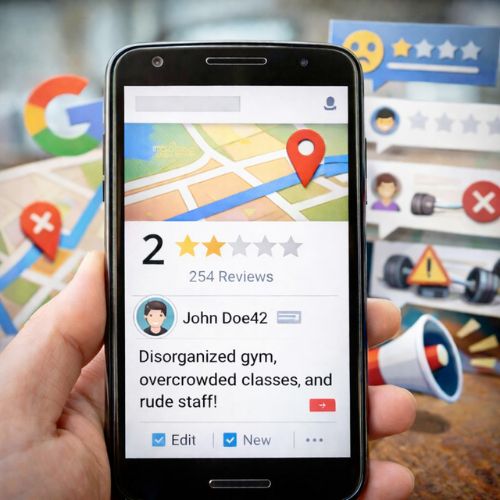
Let’s say, for example, a gym owner receives a 1-star Google review from a profile named “John Doe 42” with a generic profile photo. The review mentions gym disorganization, overcrowded classes, and rude staff, but doesn’t include specific equipment, dates, or classes.
Without a real name or recognizable photo, the owner can’t confidently connect the review to an actual member, trial guest, or former cancellation. This makes it difficult to investigate the feedback internally, follow up with the right team, or determine whether the experience reflects a real issue.
That uncertainty can make feedback feel less reliable, which is why businesses need to monitor closely, respond carefully, and watch for repeat behavior that may signal misuse or policy violations.
What This Means for SEO
Google reviews remain a core factor in local SEO. Review volume, recency, ratings, and business responses all influence how a business appears in local search results. Google has also stated that responding to reviews helps build trust with customers and shows that a business values feedback, which can support visibility over time.
What’s changing is not the importance of reviews, but how businesses need to manage them.
With personalized display names making reviewer identity less clear, delayed or reactive responses become riskier. For example, a gym that receives a vague 1-star review from an unfamiliar profile may hesitate to respond or may reply defensively. That response is visible to every potential member who finds the business on Google Maps, and it can undermine trust even if the review itself lacks detail.
On the other hand, a calm, professional response that acknowledges the concern and invites offline conversation sends a strong signal. It shows Google and searchers that the business is active, attentive, and credible, regardless of who left the feedback. Over time, these engagement signals can influence both user behavior and local search performance.
The takeaway is straightforward. Reviews matter just as much as before, but having a clear, consistent process for monitoring and responding matters more than ever.
Businesses that treat review management as part of their SEO strategy are better positioned to maintain visibility, trust, and long-term performance as Google continues to evolve its platform.
TAG’s Approach to Reputation Management
As review platforms continue to change, reputation management requires greater consistency and oversight. At TAG Digital Marketing (TAG), we help businesses monitor Facebook, Google, and Yelp reviews and respond in ways that support customer trust and search visibility.
A structured approach helps businesses stay informed and prepared as new features are introduced, turning reputation management into a long-term practice rather than a reactive task. If you’re reassessing how your Google reviews are handled, this is a good time to evaluate whether your current process is effective at protecting your reputation and maintaining trust.
- - - - - - - -
Founded in 1999, TAG Digital Marketing is a full-service digital marketing agency specializing in lead generation and customer acquisition for franchise, local, and national businesses across multiple industries. TAG delivers custom, fully managed strategies designed to increase website traffic, leads, and revenue.
Services include website design and development, SEO, digital advertising, online enrollment, content, reputation management, and chatbot solutions. With over 70,000 successful campaigns across Google, Facebook, and Instagram, TAG brings unmatched experience, AI driven marketing expertise, and proprietary software like tagJOIN and tagCHAT. TAG is a certified Google Partner and Facebook Marketing Partner.
